
Table of Contents
- Preparing Your Finished Diamond Painting for Storage
- Diamond Painting Storage Ideas: Choosing Your Method
- Creating a Diamond Painting Portfolio for Organization
- Long-Term Diamond Painting Storage: Environmental Control
- Protecting Against Dust, Fading, and Moisture Damage
- How to Store Finished Diamond Paintings in Small Spaces
- Common Mistakes to Avoid When Storing Diamond Art
- Conclusion
Last Updated: July 26, 2026
Preparing Your Finished Diamond Painting for Storage
Completing a diamond painting represents hours of careful work. Protecting that investment requires thoughtful preparation before storage. Rushing this phase risks loose drills, peeling canvas, and faded colors that could have been prevented.
Sealing and Protecting the Surface
Sealing your finished diamond painting creates a protective barrier that prevents drills from shifting or popping off during storage. Apply a light, even coat of clear craft sealant spray across the entire surface, holding the can about 8-10 inches away in a well-ventilated area. Allow 2-4 hours for drying. Alternatively, use clear packing tape or plastic film, carefully pressing it onto the surface and smoothing out air bubbles.
Letting Adhesive Fully Cure
Most diamond painting canvases require 24-48 hours of curing time after completion. During this period, store the painting flat in a cool, dry location away from direct sunlight. Avoid stacking items on top or leaning it against walls. Warmer environments (70-75°F) allow adhesive to cure faster than cold rooms. If your space is particularly cool, wait an extra 24 hours before storage preparation.
Diamond Painting Storage Ideas: Choosing Your Method
Selecting the right storage method depends on artwork size, available space, climate conditions, and storage duration. Different approaches work better for different situations.
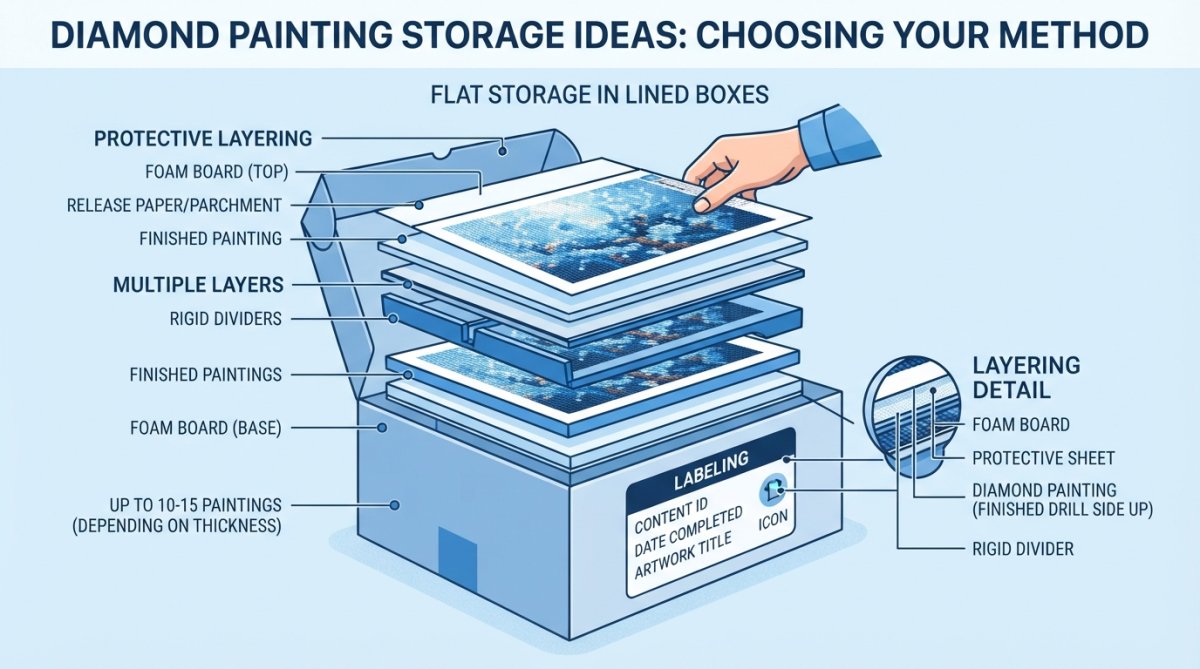
Flat Storage with Cardboard Boxes and Foam Boards
Flat storage is the gold standard for preserving diamond paintings long-term. Start with sturdy, acid-free cardboard boxes. Line the bottom with foam board (0.5-1 inch thick) for excellent protection and cushioning. Place your sealed painting face-up on the foam board. If storing multiple paintings, separate each with another foam board layer to prevent direct contact and friction damage.
Label the outside of the box clearly with the painting's title, completion date, and dimensions. This saves time when locating specific pieces later.
Under-Bed Storage Solutions
For limited space, under-bed storage offers a practical solution. Use shallow plastic storage containers with tight-sealing lids. Place foam board inside as a base layer, then arrange sealed paintings flat inside. Bedrooms typically maintain stable temperature and humidity while protecting artwork from light exposure. Verify the space stays dry before using this method, and ensure containers fit comfortably without blocking airflow.
Portfolio Cases and Storage Books
Portfolio cases and specialized storage books offer excellent organization, particularly for growing collections. Professional portfolio cases feature rigid exterior protection, interior dividers, carrying handles, and archival-quality materials. Storage books designed for artwork use similar principles in a compact, shelf-friendly format with protective sleeves for individual paintings. These solutions provide superior accessibility and protection during handling and transport.
Creating a Diamond Painting Portfolio for Organization
As your collection grows, maintaining an organized system becomes increasingly important.
Building an Inventory Management System
Start with a simple spreadsheet tracking painting title, completion date, canvas dimensions, storage location, and notes. Photograph each finished painting in good natural light before storing it, and organize images by completion date or theme. Some collectors use numbering systems assigning each painting a unique identifier corresponding to storage location and inventory records. Choose a system that matches how you think about your collection.
Using Clear Plastic Sleeves and Protective Film
Archival-quality plastic sleeves provide an additional protection layer against dust, minor moisture exposure, and physical damage. Standard plastic can off-gas chemicals that damage artwork, while archival sleeves are specifically formulated to be inert and non-damaging. Protective film, thin transparent plastic sheets, can be applied directly to sealed surfaces, creating an additional barrier against dust and minor moisture.
Long-Term Diamond Painting Storage: Environmental Control
The environment where you store paintings significantly impacts their longevity. Temperature, humidity, and light exposure all affect adhesive integrity, canvas condition, and drill color preservation.
Temperature, Humidity, and Light Protection
Ideal storage conditions maintain temperature between 65-75°F with humidity levels between 30-50°. Basements and attics are generally poor choices due to moisture problems and temperature instability. Climate-controlled closets, interior shelves away from windows, or dedicated storage rooms provide better conditions.
Direct sunlight causes diamond colors to fade over time. Store paintings in areas receiving minimal light exposure. Use silica gel packets or small dehumidifiers in storage areas prone to dampness. Aim for the middle range of the ideal humidity spectrum to prevent both warping and brittleness.
Climate-Specific Storage Strategies
In humid regions, use sealed plastic storage containers with desiccant packets inside, checking and replacing packets periodically. Avoid basements or crawl spaces where moisture accumulates. In dry climates, ensure humidity doesn't drop below 30%, using a small humidifier if needed. Keep paintings away from heating vents and radiators. Those in moderate climates should monitor storage conditions periodically, as seasonal temperature and humidity fluctuations can stress artwork.
Protecting Against Dust, Fading, and Moisture Damage
Dust prevention begins with sealed storage containers. Before sealing, clean the painting with a soft brush or compressed air, then allow it to dry completely. Store paintings in darkness or very low light to slow color fading. Moisture damage represents the most serious threat, store paintings in dry locations using desiccant packets and avoiding basements or flood-prone areas. If moisture exposure occurs, remove the painting immediately and allow it to dry in a warm, dry location with good air circulation. Consult a professional conservator if mold develops.
How to Store Finished Diamond Paintings in Small Spaces
Limited square footage doesn't prevent maintaining a growing collection.
Space-Saving Solutions for Apartments
Vertical storage solutions work exceptionally well in apartments. Wall-mounted shelving, floating shelves, or tall bookcases allow storage while using minimal floor space. Under-bed storage maximizes existing space without adding furniture. Closet organization systems designed for artwork storage can transform unused closets into efficient galleries. Rolling storage carts with multiple tiers provide flexible, portable storage. Dual-purpose furniture like storage ottomans or bench seats with interior storage allow you to store paintings while maintaining functional living space. For truly limited space, photograph finished paintings and create a digital portfolio while storing physical artwork in a climate-controlled facility.
Common Mistakes to Avoid When Storing Diamond Art
Never store paintings rolled for long periods, rolling stresses canvas and adhesive, potentially loosening or cracking drills. Avoid stacking paintings directly on top of each other without protective layers between them. Don't use non-archival materials for storage, as standard cardboard, plastic bags, and untreated wood can off-gas damaging chemicals. Resist storing paintings in damp areas like basements or garages. Never expose stored paintings to temperature extremes. Avoid storing in direct sunlight, even through windows. Check on stored paintings every 6-12 months to catch developing problems early.
Storing finished diamond paintings properly ensures your creative work remains beautiful and intact for years to come. At Jeanne Argent Atelier, we believe your finished diamond paintings deserve the same care and attention you gave them during creation. Our full-drill kits with premium adhesive and specialized tools create paintings that respond well to proper storage techniques. The high-quality materials we use, including our superior canvas and carefully selected drills, maintain their integrity when stored according to these guidelines. Start with Jeanne Argent Atelier kits and follow these storage practices to build a collection you'll treasure for decades.
Key Storage Methods Comparison
| Storage Method | Best For | Space Required | Access Level | Protection Level |
|---|---|---|---|---|
| Cardboard boxes with foam board | Long-term preservation, large collections | Moderate | Low | Excellent |
| Under-bed containers | Small apartments, frequent pieces | Minimal | Medium | Very good |
| Portfolio cases | Growing collections, regular viewing | Moderate | High | Excellent |
| Wall-mounted shelving | Display and storage combined | Minimal | High | Good |
| Climate-controlled storage facility | Valuable pieces, limited home space | Off-site | Low | Excellent |
External Resources
According to the American Institute for Conservation guidelines on artwork storage, maintaining stable temperature and humidity levels is critical for preserving any artwork, including diamond paintings and other craft projects.
Research from the Library of Congress preservation standards emphasizes the importance of archival-quality materials when storing valuable artwork long-term, as standard materials can degrade and damage pieces over decades.
The Smithsonian Institution's guide to personal collection care recommends organizing and documenting artwork collections systematically, which helps protect pieces while making them easier to locate and enjoy over time.
Frequently Asked Questions
Should you seal a finished diamond painting before storing it?
Yes, sealing is recommended for long-term storage. Apply a clear sealant or protective film to prevent dust from settling on the diamonds and to protect the adhesive from environmental damage. Allow the sealant to cure completely before storage. For paintings you plan to frame or display soon, sealing is less critical, but it provides extra insurance against moisture and dust exposure during storage.
What's the best way to store multiple finished diamond paintings in a small apartment?
Use under-bed storage containers with acid-free dividers, or invest in a slim portfolio case that fits in a closet. Stack paintings flat with foam board separators between each piece to prevent surface damage. Label each container with an inventory system so you can locate specific paintings easily. This approach maximizes vertical and horizontal space while keeping your finished artwork protected and organized.
How does long-term diamond painting storage differ from temporary storage?
Long-term storage requires archival-quality materials, climate control (cool and dry place, ideally 60-70°F and 30-50% humidity), and UV protection from direct sunlight. Temporary storage can use standard cardboard boxes, but long-term requires acid-free boxes, protective film, and careful environmental monitoring to prevent fading and moisture damage. Long-term storage also benefits from an inventory management system to track your collection.
Can you store finished diamond paintings in a portfolio case or binder?
Yes, portfolio cases and storage books are excellent options for finished diamond paintings. Use acid-free sleeves or clear plastic sleeves within the portfolio to protect each piece from dust and adhesive transfer. Portfolio cases work well for smaller finished artworks and are portable if you want to transport or display your work. Ensure the case is stored in a cool, dry location away from direct sunlight to prevent fading.
This article was written using GrandRanker